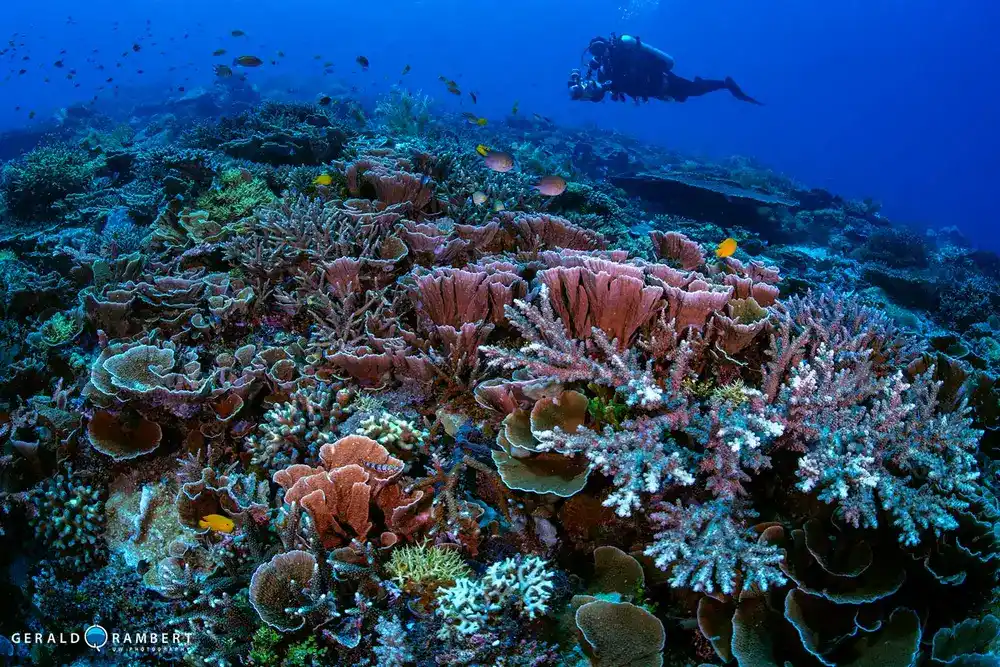

Komodo National Park is one of the most thrilling marine destinations in the world, attracting divers who crave adventure, manta encounters, vibrant reefs, and exhilarating drift dives. Its waters are powerful, unpredictable, and incredibly rewarding — but they require preparation and respect. Understanding the specific safety practices for Komodo diving is essential for ensuring a safe and unforgettable experience.
Understanding Komodo’s Unique Currents
Komodo is located between the Pacific and Indian oceans, creating a massive funnel where water passes through narrow channels, deep basins, and steep underwater topography. This movement generates the region’s legendary currents — from gentle drifts to intense “washing machine” rotations.
There are three primary types of currents divers must be aware of:
1. Horizontal Currents
These are the classic drifts that Komodo is famous for. At sites like Makassar Reef, divers may glide effortlessly over sand highways while mantas soar overhead. These dives are manageable with experience and reasonable buoyancy control.
2. Vertical and Downcurrents
Sites such as Batu Bolong and The Cauldron can produce strong downward pulls, especially when tides shift. Downcurrents can appear with little warning. The key is to remain calm, inflate your BCD gradually, and swim outward at a 45° angle instead of directly upward.
3. Reversal Currents
Specific dive sites change direction depending on the tide, making local knowledge essential. Always rely on your guide’s timing — entering a site at the wrong moment can be dangerous.
These powerful movements are a significant reason why safety begins long before entering the water. Proper preparation and briefing are the foundations of safe Komodo diving.
Also read Exploring Komodo Hidden Highlands Before Your Boat Charter
The Importance of Local Dive Briefings
A good briefing can make or break a dive in Komodo. Because conditions change rapidly, local dive guides rely on years of experience, tide charts, and firsthand observations to decide when and how to enter a site.
A high-quality Komodo safety briefing should include:
- Current direction and strength
- Expected marine life behavior (especially mantas and sharks)
- Entry and exit procedures
- Drift plan and separation protocols
- Depth limits and navigation
- What to do during downcurrent scenarios
- Where to deploy the SMB
Some sites require strict timing, especially during rising or falling tides. Your guide will choose the optimal window, and following their instructions is crucial. This is one of the reasons many divers choose reputable operators such as Wallacea Diving Cruise, known for experienced guides and careful site selection.
Mastering Negative Entries
A negative entry is a technique for descending immediately without pausing at the surface. It prevents the current from sweeping divers away and keeps the group together.
A safe negative entry involves:
- Entering the water with no air in your BCD.
- Descending the moment you hit the surface.
- Equalising quickly while staying close to your buddy.
- Following the guide directly to the depth where currents stabilise.
These entries are common in Komodo, especially at exposed sites. If you aren’t comfortable with fast descents, communicate this to your guide; alternative sites can always be arranged.
Why SMBs Are Non-Negotiable
Every diver in Komodo should carry a surface marker buoy (SMB). The channels between islands can attract strong winds, fast-moving boats, and unpredictable surface currents.
An SMB is essential for:
- signalling your location during drift dives
- alerting boats during separation
- providing visibility at the surface
Some operators also supply long safety sausages designed to be highly visible from a distance — especially useful near high-traffic zones.
Recommended Dive Experience Levels
Komodo can accommodate all levels, but not every site is suitable for beginners. Here’s a general guideline:
- Beginner (5–20 dives): calm sites like Sebayur or sheltered reefs
- Intermediate (20–50 dives): moderate drifts, manta sites, and deeper reefs
- Advanced (50+ dives): high-current pinnacles like Castle Rock, Crystal Rock, and Batu Bolong
Divers who join a Komodo liveaboard typically have access to a curated selection of sites based on their skill level. Premium operators such as the Ambai and Seahorse liveaboards also offer guides with extensive regional knowledge, making them excellent choices for safety-conscious travellers.
Choosing a Safe Operator for Diving in Indonesia
When planning diving in Indonesia, especially in current-heavy regions like Komodo, choose reputable operators that prioritise safety standards, professional briefings, strong boats, and experienced guides. This ensures every diver, regardless of skill level, can explore the spectacular underwater world confidently and responsibly.
Strong currents are part of what makes Komodo so dynamic and biodiverse — but they demand respect, preparation, and attentive guidance. By understanding currents, mastering negative entries, relying on expert briefings, and carrying essential safety equipment, every diver can enjoy the best the region has to offer. With the right mindset and operator, Komodo diving becomes not only safe but unforgettable.


