

Raja Ampat sits roughly 2,800 kilometres east of Jakarta, and getting there takes more planning than most Indonesian destinations. The archipelago holds around 1,500 islands built around four larger landmasses: Waigeo, Batanta, Salawati and Misool. The water between them shelters an estimated 75 percent of the world’s known coral species. Most travellers see this stretch of the Coral Triangle from a boat rather than a resort, and booking a Raja Ampat liveaboard is the standard way to reach the far corners of the archipelago in a single voyage. This guide covers the practical layer of planning a Raja Ampat liveaboard trip: the flight, the budget, what to pack, the day by day route, and which sites suit which level of diver.
Flying from Jakarta to Sorong
Every Raja Ampat liveaboard trip begins at Domine Eduard Osok Airport in Sorong (SOQ), the only sensible gateway into the archipelago. Garuda Indonesia and Batik Air operate nonstop service from Soekarno Hatta with a flying time close to four hours. The flight is a red eye by design, departing shortly after midnight from Terminal 3, which puts passengers on the ground in Sorong early in the morning, local time being two hours ahead of Jakarta.
That timing works in a traveller’s favour, since boats generally board during the day, leaving enough time to clear baggage and reach the harbour without rushing. Lion Air and Sriwijaya Air offer an alternative through Makassar, with total travel time stretching to around six hours.
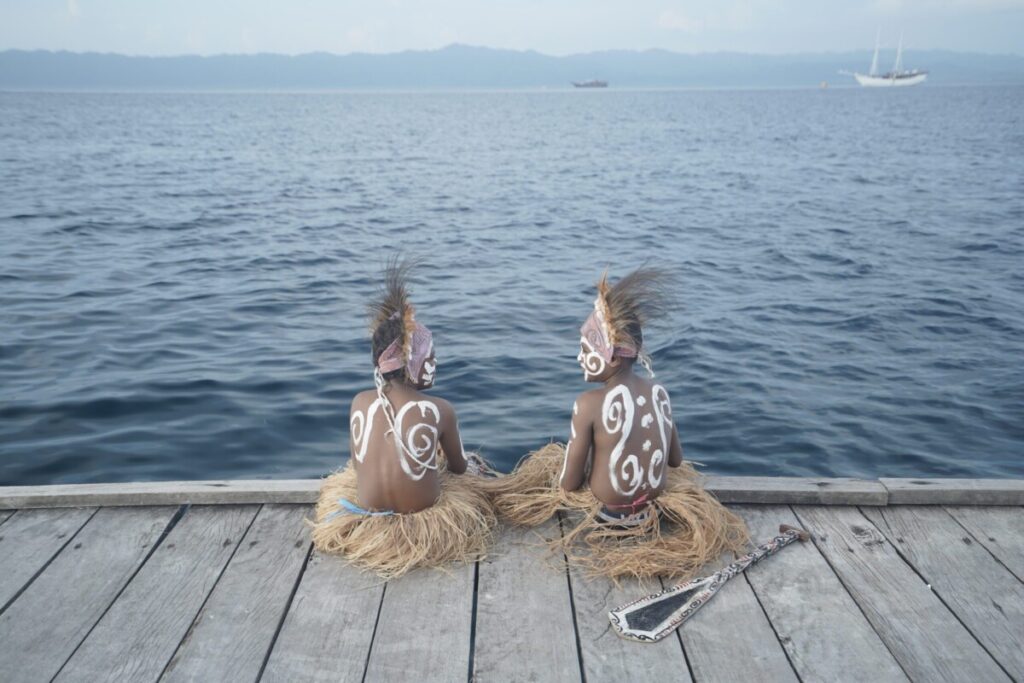
What to Pack and Prepare
A Raja Ampat liveaboard runs for days at a stretch with no shops along the way, so preparation matters more here than on a typical dive trip. Beyond flights and permits, plan for the following before boarding.
- Certification card and logbook, since operators will ask to see proof of your last level and dive count before assigning you to current heavy sites.
- Personal dive gear, if you have your own preferences, though full rental sets (regulator, BCD, wetsuit, fins, dive computer) are standard on most liveaboards for those who don’t.
- Reef safe sunscreen and a rash guard, since chemical sunscreens are discouraged in protected waters and sun exposure on deck is constant.
- Motion sickness medication, taken the night before overnight passages such as the run to Wayag or the crossing to Misool.
- Cash in small denominations, for village visits, tips and any incidentals, since there are no ATMs once the boat departs Sorong.
- A dry bag and basic first aid kit, plus any personal medication, since the nearest clinic can be a full day’s sail away.
- Lightweight, quick dry clothing and a light jacket, since evenings on deck can feel cool despite the warm daytime temperatures.
Budget Breakdown
| Item | Cost Range | Notes |
| One way domestic flight Jakarta to Sorong | USD 120 to 250 | December through February at the higher end |
| Sorong transit hotel, one night | USD 25 to 60 | Worth building in as a delay buffer |
| 7 to 9 day liveaboard, shared cabin | USD 3,400 to 5,000 per person | Northern or southern route only |
| 12 day liveaboard, north, central and south | USD 6,000 to 7,300 per person | Full route as outlined below |
| Private charter, whole vessel | USD 4,900 to 5,900 per night | Competitive for larger groups |
| Regional conservation permit | Arranged by operator | Funds ranger patrols and reef monitoring |
Crew gratuities are customary and usually calculated as a small percentage of the trip price. A reliable Raja Ampat liveaboard operator will state clearly what is included in the fare and what is not, particularly nitrox, equipment rental and airport transfers.
The 12 Day Route: Sorong to Misool
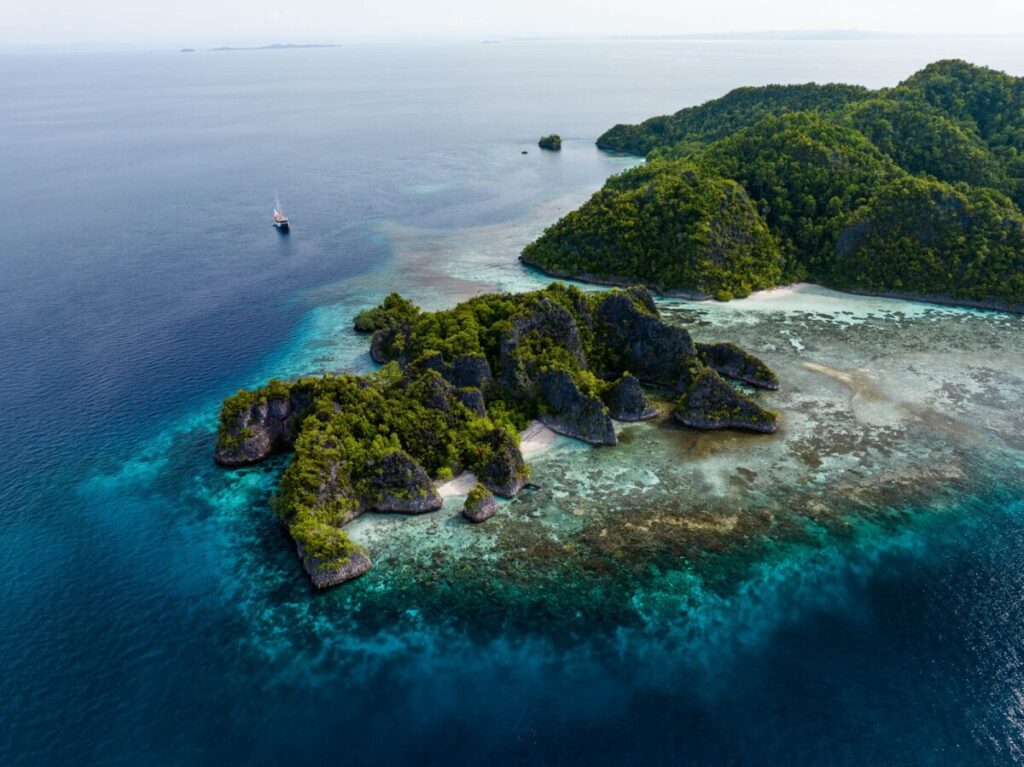
This is the itinerary shape used by vessels such as Jakaré, sailing north from Sorong first and finishing in the south.
| Day | Location | Activities and Sites |
| 1 | Sorong to Waisai | Boarding, check dive at Saonek Kecil |
| 2 | Dampier Strait | Diving and snorkelling at Mioskon, Blue Magic, Cape Kri; afternoon at Saunderek |
| 3 | Wayag and Kawe | Sunrise climb up Mount Pindito, dive at Batu Seven, then Black Rock or Eagle Rock |
| 4 | Wofoh and Yeben | Kayak and paddle the bays, easy wall dive, beach BBQ |
| 5 | Pienemu | Lagoon walk, dives at Keruo Channel and Melissa Garden |
| 6 to 11 | Misool | Balbulol, Boo Window, Fiabacet, Wayil (Four Kings), Pele, Daram |
| 12 | Return to Sorong | Overnight passage, checkout |
Shorter alternatives exist for those without 12 days to spare, such as a North plus Central or South plus Central package alone, or a Misool combination extending east into Triton Bay or west into Halmahera for a longer voyage.
Dive Sites: Matched to Level
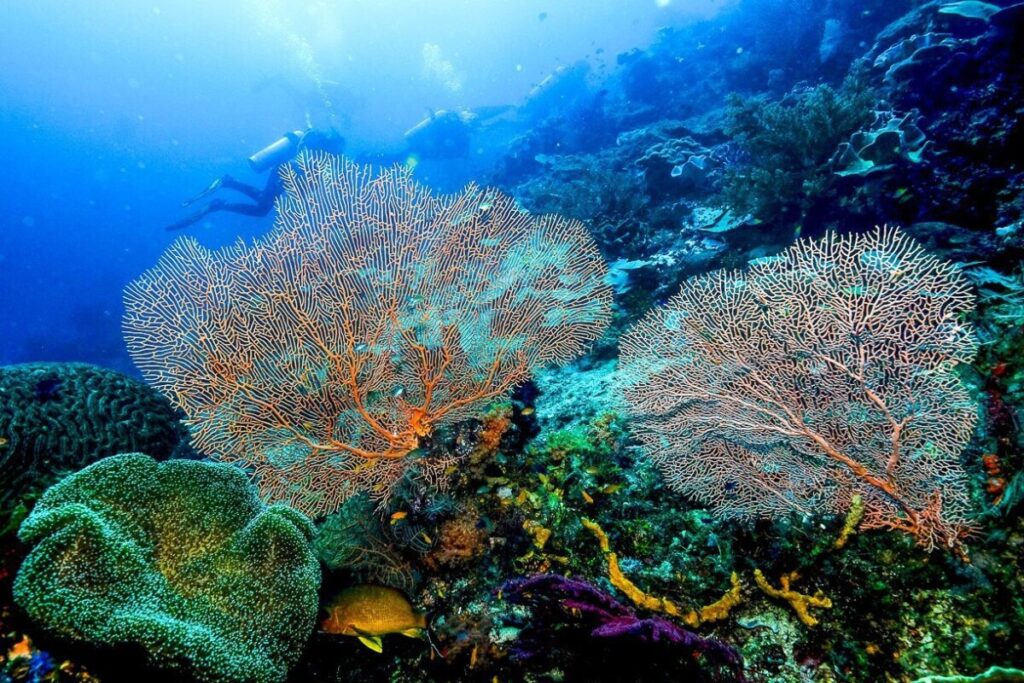
Not every site in Raja Ampat suits every diver. This table maps the main spots by level and current character, so they can be matched against certification and experience before booking.
| Site | Area | Level | Character |
| Mioskon | Dampier Strait | All levels | Easy dive and snorkel, strong for macro (wobbegong, pygmy seahorse) |
| Blue Magic | Dampier Strait | Advanced, tide dependent | Strong current, exposed pinnacle facing the flow |
| Cape Kri | Dampier Strait | All levels | Gentle slope, highest recorded diversity (374 species in one dive) |
| Batu Seven and Wayag | Wayag | All levels | Calm lagoon, good for manta and easy snorkelling |
| Black Rock and Eagle Rock | Kawe | Current, all levels | Dense soft coral, manta cleaning stations |
| Keruo Channel | Pienemu | All levels | Easy drift wall, rich in small critters |
| Melissa Garden | Pienemu | All levels | Current pinnacle, large fish schools |
| Boo Window | Misool | All levels | Rock formation pierced with openings, an iconic photo site |
| Magic Mountain | Misool | All levels | Regular oceanic mantas, shallow ridge near the surface |
| Four Kings | Misool (Wayil) | Advanced, tide dependent | Four adjacent pinnacles, swimmable between points |
| Fiabacet | Misool | All levels | Home to Bargibanti and Denise pygmy seahorses |
The general pattern holds across most Raja Ampat liveaboard itineraries. The northern route through the Dampier Strait and Wayag runs stronger current and suits more experienced divers, while Misool in the south offers more beginner and snorkeller friendly options thanks to its shallow, sheltered structure.
When to Sail
The season runs October to April, with air temperatures around 30 degrees Celsius, water at 28 to 29 degrees, and generally calm seas. Visibility tends to be moderate rather than crystal clear, a direct result of the nutrient density that also makes the reef here so productive and draws manta rays to their cleaning stations.
December through February is peak season and typically books out a year ahead for any well run Raja Ampat liveaboard. Late October, November and April are shoulder periods with better availability and softer pricing, without sacrificing conditions.
The distance from Jakarta and the planning it demands are part of why the reefs east of Sorong still look the way they do. With the flight sorted, the budget mapped out and the right route chosen, the rest of the trip is mostly about showing up ready.
Questions to Ask Before Booking
Before committing to a Raja Ampat liveaboard, a short call or email with the operator can save a lot of surprises later. These are worth asking directly.
- What exactly is included in the price, such as nitrox, equipment rental, airport transfers and the conservation permit?
- What is the ratio of dive guides to guests?
- What is the refund or reschedule policy if weather forces a change or the trip gets cancelled?
- Is emergency oxygen on board, and what is the medical evacuation procedure?
- How many dives are offered per day, and are night dives included?
- What activities are available for guests who are not diving?
Start Planning
Getting to Raja Ampat takes a red eye flight, a realistic budget, and a route that matches the time available, but the payoff is a stretch of reef unlike anywhere else in the Coral Triangle. Whether the plan is a full 12 day loop through the Dampier Strait and Misool or a shorter route focused on one region, the Raja Ampat liveaboard routes operators sail give a good starting point for shaping an itinerary that fits your dates and diving level.
Frequently Asked Questions
Can you fly to Raja Ampat from Bali?
Yes, almost always with one connection through Jakarta or Makassar. A nonstop Denpasar to Sorong service has existed but runs seasonally, so check current schedules before booking.
Do you need a diving certification?
Open Water is the minimum, and Advanced Open Water is recommended for current driven sites like Blue Magic. Non divers can still join as snorkellers.
Is there an entry permit?
Yes, a regional conservation permit is required for all visitors and is usually arranged by the operator as part of booking.
Is it suitable for non divers?
Very much so. Kayaking, paddleboarding, island treks and village visits are all part of the itinerary, and many sites are shallow enough to enjoy from the surface.


